// FILE 02
The consensus tax: why your need for agreement is killing profit

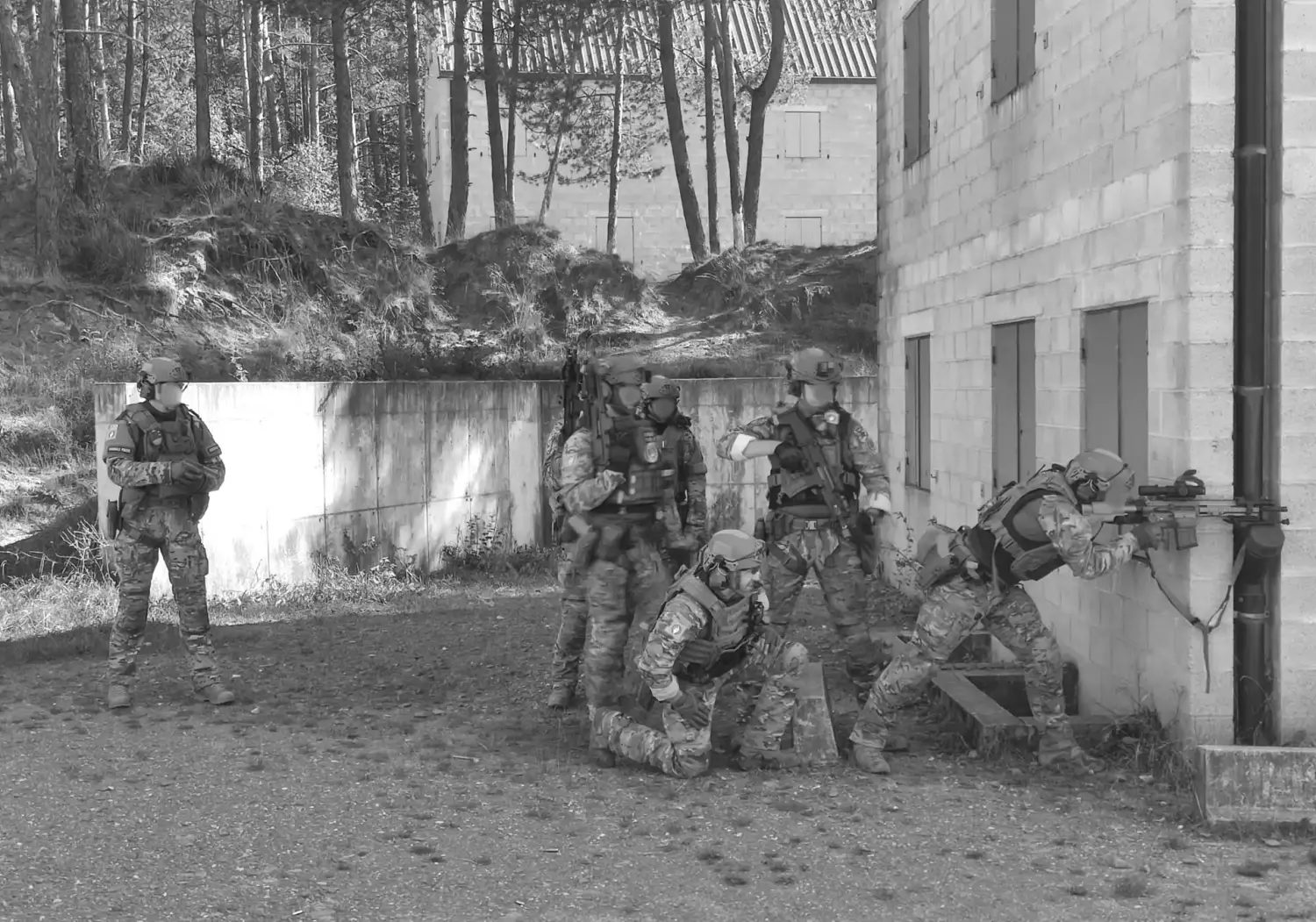
In my time with the DSU (Special Forces), a two-hour delay wasn’t just “unproductive.” It was an operational liability.
When you’re stacked at a door, waiting for the breach signal, you don’t call a committee meeting to “align on the strategic synergies” of the entry. You act. Because the mission demands it.
In the boardroom, I see the opposite. I see twelve smart people sitting around a table for two hours, only to conclude: “Let’s circle back next week when we have more data.”
Leaders often mistake this hesitation for “due diligence.” At BACKBONE., we call it by its real name: the consensus tax. It is the hidden profit killer in your organization and the breeding ground for mediocrity.
A “perfect” plan delivered too late is worthless compared to a 70% plan delivered right now.
The price of “playing it safe”
The consensus tax is the high price you pay for the illusion that everyone must agree before you move an inch. In tactical operations, we never had that illusion. Being late costs more than a deal there.
Look at your own operation and you’ll see the tax bleeding you dry in three places:
Decision inertia. The window of impact slams shut while you’re still polishing the PowerPoint. The market doesn’t wait for internal consensus.
Accountability dilution. Involvement is needed, consensus is a trap. In the DSU, I needed the input of my experts, but we didn’t do rounds of “mine is bigger than yours.” We focused on the target. If you are at the table, you are expected to provide insight that serves the mission. If you don’t, you shouldn’t be in the room. Ultimately, the leader makes the call and owns the result.
Lowest common denominator. Consensus rarely leads to the best solution. It leads to the safest, blandest option: the result that offends no one but wins nothing. That is the same tolerance for 6/10 that destroys your standard.
If your organization’s decision velocity is slower than the market’s rate of change, you are already insolvent. You just haven’t seen the final audit yet.
From the DSU to the boardroom: Commander’s Intent
In high-stakes environments, you operate without constant meetings through one principle: commander’s intent.
In the Special Forces, we know communication can fail. Radios go silent. The situation changes faster than HQ can track. If a team only has a “to-do list,” they freeze. But if they have the intent, they win.
Commander’s intent is a radical shift from “doing what you’re told” to “achieving the objective.” It requires three anchors:
The goal. Exactly what we must achieve. The why. Why this matters for the bigger picture. The parameters. The non-negotiable standard and the boundaries.
Once the intent is clear, the “how” belongs to the team. This grants your unit the autonomy to adapt without waiting for permission from the top. It only works on cohesion, not connection.
Keeping people informed is leadership; asking them for permission to act is weakness.
Cut the chatter
The consensus tax is fueled by chatter: vague corporate jargon used to hide a lack of courage. “Let’s keep everyone in the loop” usually translates to: “I don’t want to be the one held accountable if this fails.”
The nuance sits right there: informing versus asking permission. In a mature organization, everyone has a clear mandate. You must know exactly what you can decide autonomously and to whom you report. Anything else is just fog.
If a meeting doesn’t start with a sharp objective and end with an assigned owner for a specific action, it wasn’t a meeting. It was a social gathering. And at your level, social gatherings are too expensive to have on the clock.
Speed as a force multiplier
High-performance units don’t necessarily make “better” decisions, they make them faster.
Speed is a force multiplier. A 90% correct decision made today is worth ten times more than a “perfect” decision made in three weeks. By increasing your decision velocity, you force the competition into a defensive crouch. While they are still debating their first move, you are already on your third iteration. You set the parameters of the fight.
Maintaining the initiative is the standard.
Stop navigating on hope. Stop allowing vagueness to masquerade as collaboration. Define the intent. Demand radical clarity. Stop the waste. No excuses. The standard is the standard.